







|

The Right Foam for Your ClimateFollow the steps below to determine the proper spray foam insulation to use for your application and climate. STEP 1: Determine your Climate RegionThe Department of Energy's Building America program has defined several distinct climate regions in the US. Use the chart or link to identify which insulation zone you are in.
THE US CLIMATE REGION
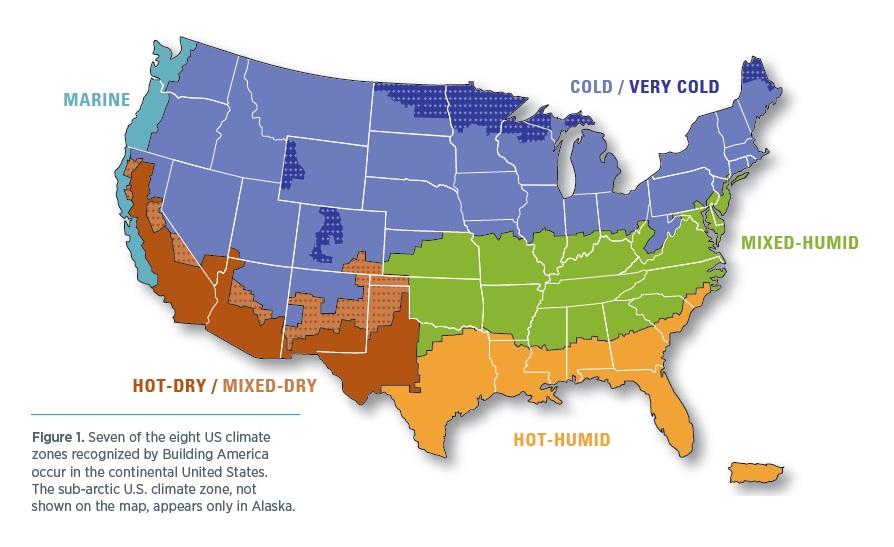 Click the map for larger image.
(IECC Zone) You can also use the Building America Guide to help determine your climate region by county.
STEP 2: Identify your ApplicationFind the application and description below that most closely matches your project. Use the apropriate chart to determine the type and amount of foam to use for your project. Scroll down to find your application or click on one of the following categories. Exterior Walls
A. EXTERIOR WALL CAVITY (FOAM ONLY)
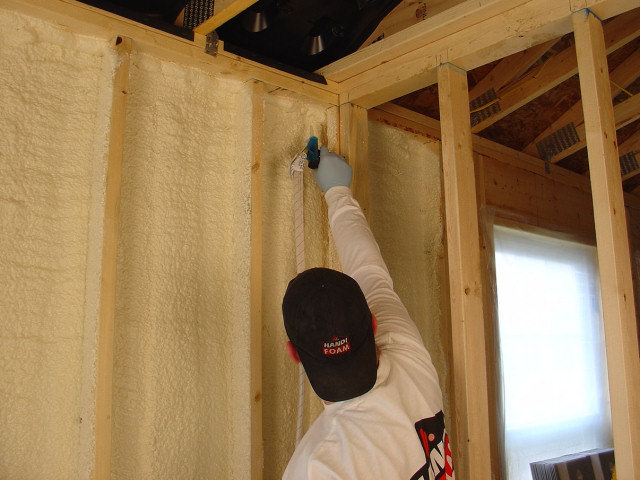
One of the most common uses for foam is spraying exterior wall cavities. In this application, foam is used as the only insulation in the wall cavity.
B. EXTERIOR WALL CAVITY (HYBRID)

In the hybrid application, a layer of closed cell foam is first sprayed in the wall cavity to provide an air seal. Next another form of insulation such as fiberglass or cellulose is added to fill the remainder of the wall cavity.
C. EXTERIOR WALLS (BELOW GRADE)
Exterior walls below grade level. Foam is sprayed in a wall cavities. (See below for Basements and Crawl Spaces)
D. EXTERIOR WALLS (MASS WALLS)

Walls made of block or concrete insulated on either the exterior or interior side.
WALLS - FOAM TYPE AND THICKNESS CHART
* R-Values as specified in the International Energy Conservation Code (IECC) 2009. ** Use the first value if insulation is on the exterior side of the wall, the second if on the interior side. Basement and Crawl Spaces
D. BASEMENT / CRAWL SPACE WALLS
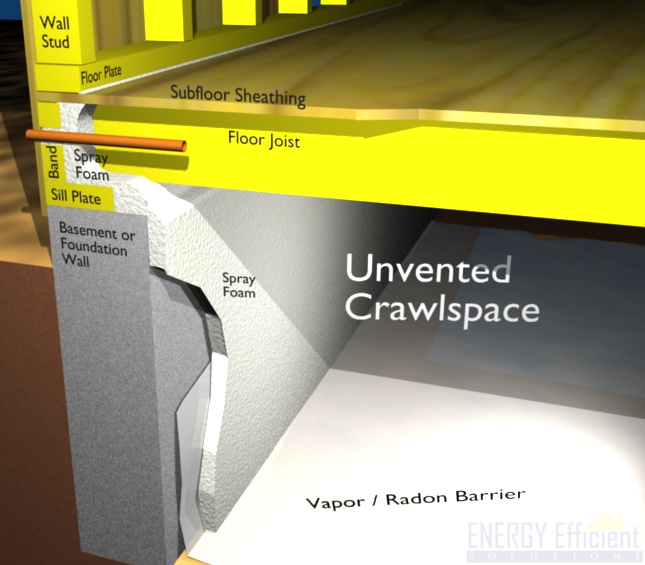
Spraying the interior side of unvented basement, crawlspace or foundation WITHOUT a stud wall. Always use Closed Cell foam for this application. Note: It is recommended to install a qualified Vapor/Radon Barrier over any exposed earth.
E. BASEMENT / CRAWL SPACE WALLS (STUD WALL / FOAM ONLY)
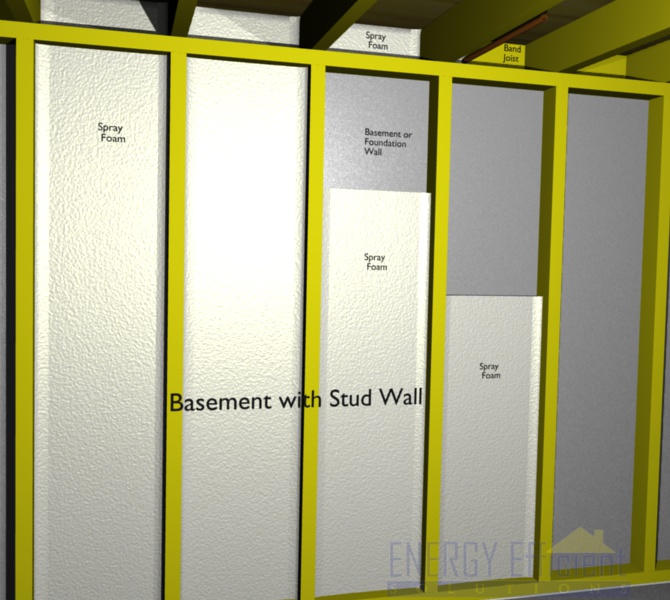
Spraying the interior side of unvented basement, crawlspace or foundation WITH a wood stud wall. Always use Closed Cell foam for this application Note: It is recommended to install a qualified Vapor/Radon Barrier over any exposed earth.
F. BASEMENT / CRAWL SPACE WALLS (STUD WALL / HYBRID)
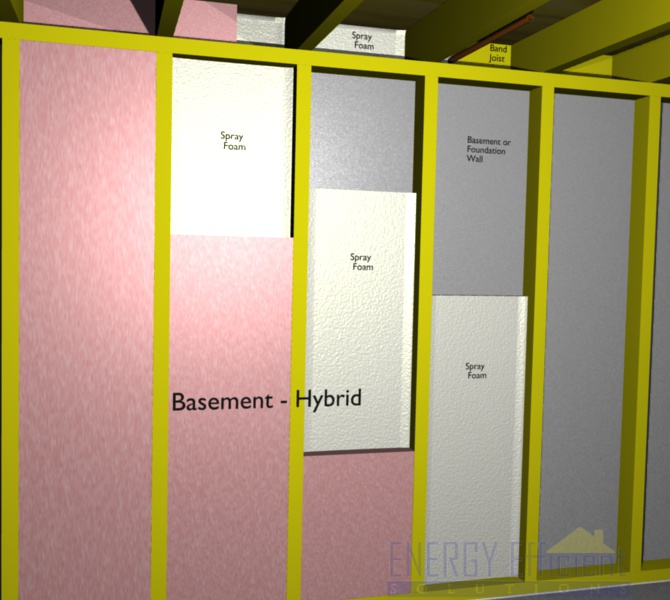
Spraying a layer of foam the interior side of unvented basement, crawlspace or foundation WITH a wood stud wall and adding additional insulation to fill the cavity. Always use Closed Cell foam for this application Note: It is recommended to install a qualified Vapor/Radon Barrier over any exposed earth.
BASEMENT / CRAWL SPACES - TYPE AND THICKNESS
* R-Values as specified in the International Energy Conservation Code (IECC) 2009. Floors (over open or vented spaces)
G. FLOOR (FOAM ONLY)
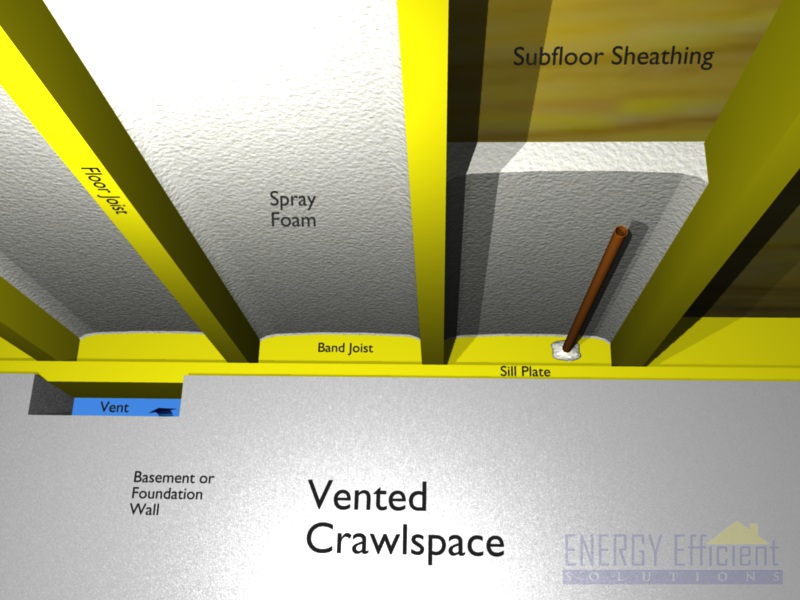
Spraying the underside of a floor above unconditioned or vented space. Always use Closed Cell foam for this application
H. FLOOR (HYBRID)
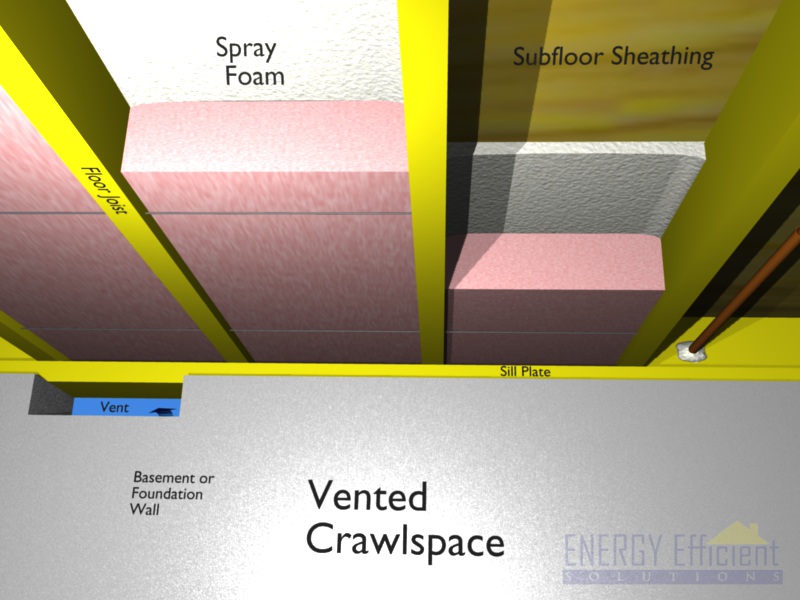
In the hybrid application, a layer of closed cell foam is first sprayed on the bottom of the floor to provide an air seal. Next another form of insulation such as fiberglass is added to bring the total R-Value to desired level.
FLOORS - TYPE AND THICKNESS
* R-Values as specified in the International Energy Conservation Code (IECC) 2009. Interior Walls & Floors
I. INTERIOR WALLS (SOUND)
Spraying interior walls mainly for sound reduction. It is best to use Open Cell foam for this application
J. FLOOR (BETWEEN HEATED SPACES)
Spraying interior floors (between heated spaces) mainly for sound reduction. It is best to use Open Cell foam for this application
FLOORS - TYPE AND THICKNESS
|
||||||||||||||||||||||||||||||||||||||||||||||||||||||||||||||||||||||||||||||||||||||||||||||||||||||||||||||||||||||||||||||||||||||||||||||||||||||||||||||||||||||||||||||||||||||||||||||||||||||||||||||||||||||||||||